
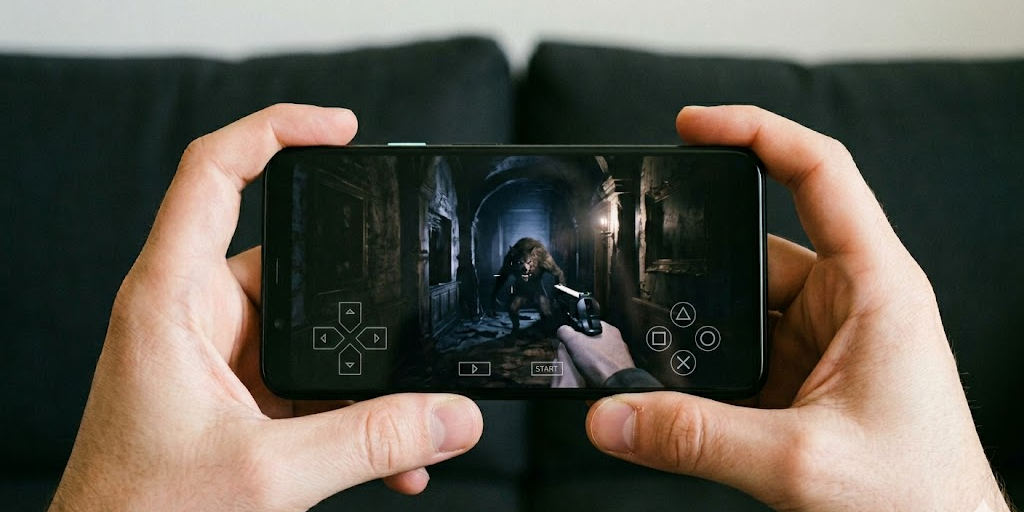
For years, “mobile gaming” was a term synonymous with colorful puzzles and simplified mechanics. But as of April 2026, the industry has hit a definitive tipping point. The arrival of the Snapdragon 8 Elite Gen 5 and Apple’s A19 Pro has effectively erased the technical “iron curtain” that once separated handhelds from home consoles. We are no longer looking at watered-down “mobile versions” of games, we are running the actual games.
The Silicon Power Play
The core of this breakthrough lies in the 3nm (N3P) fabrication process. This year’s flagship chipsets have achieved what was once thought impossible: desktop-class single-core performance in a pocketable form factor. Recent benchmarks show the Snapdragon 8 Elite Gen 5 matching the A19 Pro in raw speed, while its Adreno 840 GPU handles hardware-accelerated ray tracing with ease. This allows for complex lighting, reflections, and asset density in titles like Cyberpunk 2077 and Resident Evil Village that were previously reserved for the PS5 or high-end PCs.

Solving the Thermal Puzzle
The biggest hurdle for AAA mobile gaming hasn’t been raw power, but thermal endurance. In 2026, manufacturers have moved beyond passive cooling. Specialized gaming handsets now feature internal active fans and advanced vapor chambers that extend the “peak performance window” beyond the traditional 15 minute mark. For those on standard flagships, 50W magnetic coolers capable of dropping device temperatures by nearly 10°C in under a minute have become the essential “pro” accessory, allowing for hours of sustained high-fidelity play.
A Platform-Agnostic Future
We are entering an era of “Platform Collision.” With the launch of Starfield on mobile and the continued dominance of cross-progression in titles like Genshin Impact and Warframe, the device you play on is becoming a matter of convenience rather than a limitation.
As we look toward the rest of 2026, the message from developers is clear, if you have a flagship phone in your pocket, you have a AAA console in your pocket. The era of the “compromised port” is officially over.




Leave a Reply